US Pushes Congo-Rwanda Peace Deal Further With New Plan to Secure Critical Minerals
The United States has taken a significant step in the global race for critical minerals by announcing plans to invest in a new partnership designed to secure access to Congo’s vast reserves of copper and cobalt. The move comes just one day after U.S. President Donald Trump met with the leaders of the Democratic Republic of Congo and Rwanda to sign a peace agreement aimed at ending long-standing conflict in eastern Congo, a region central to the world’s mineral supply chain.
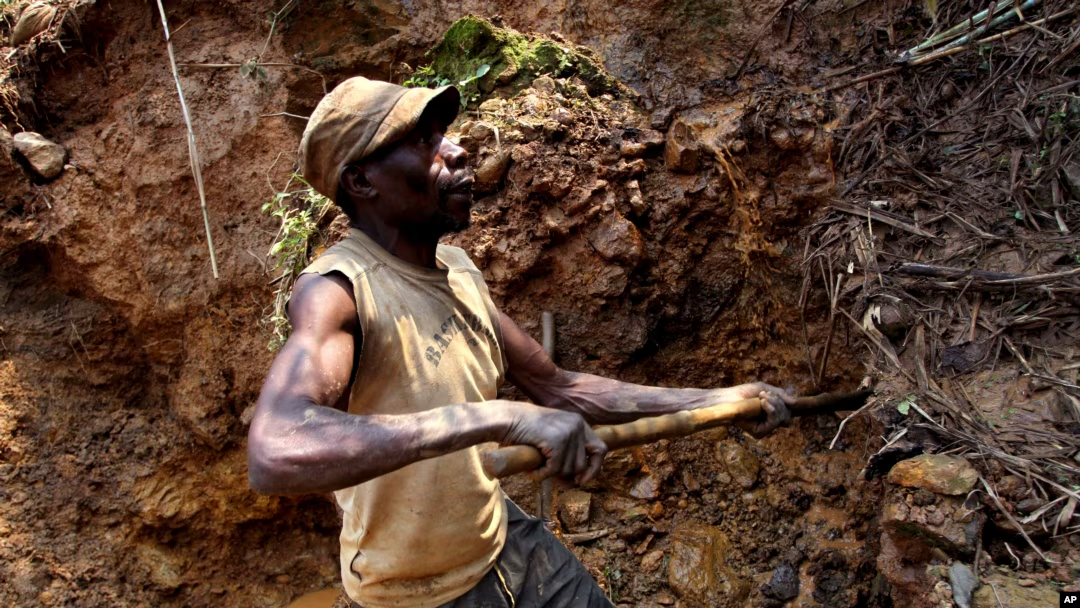
The U.S. is vying with China for dominance over minerals essential to modern technology, from electric vehicles to smartphones. Congo holds around 72 percent of the world’s cobalt reserves and produces more than 74 percent of the global supply, much of it mined by artisanal workers. The latest U.S. strategy seeks to stabilise these supply chains while positioning American industries at the front of the line for critical resources.
A New Economic Strategy Tied to a Delicate Peace Deal
The peace agreement signed in Washington links security measures to a broader economic plan that opens Congo’s mineral wealth to Western investors. This includes copper, cobalt, lithium and gold, all vital for electric vehicles and clean energy technologies.
Trump described the moment as a new era of harmony and cooperation that could bring prosperity across Central Africa. However, the optimism was tested almost immediately as renewed fighting erupted in eastern Congo the following day and both countries have yet to fully implement on-paper commitments.
Despite the uncertainty, the agreement underscores the growing importance of strategic minerals in global geopolitics and the U.S.’s determination to counter China’s influence in Africa.
U.S. Development Lender Moves to Secure Mineral Supplies
The U.S. International Development Finance Corporation announced plans to potentially take an equity stake in a new joint venture between Congo’s state mining company, Gecamines, and Swiss commodities giant Mercuria. The deal would give U.S. companies the right of first refusal on copper and cobalt sourced through the venture, creating a direct path for American manufacturers to access essential minerals.
According to Gecamines and Mercuria, the partnership could later expand to include germanium and gallium, both critical for semiconductors and solar technologies. Gecamines chairman, Guy Robert Lukama, called the collaboration a pivotal step in strengthening Congo’s position in global metals markets.
The U.S. lender said the planned investment would support the commercialisation of these minerals, ensuring that American and allied buyers have access to responsibly sourced materials needed for EV batteries and clean energy production.
Transforming Congo’s Metals Market With Transparency and Infrastructure
The partnership aims to reshape how Congo interacts with global metals markets by improving transparency, competitiveness and supply chain oversight. Congo has recently introduced export quotas, launched a traceable artisanal cobalt initiative and announced new export conditions in an effort to streamline the sector.
Mercuria will oversee logistics, financing and trading operations, while also offering training in risk management. The joint venture also plans to invest in export infrastructure to address long-standing bottlenecks that hinder mineral transportation.
Kostas Bintas, Mercuria’s global head of metals and minerals, described the initiative as a redefinition of Congo’s engagement with the global mineral economy.
Expanding Regional Connectivity Through Rail Infrastructure
Beyond mineral supply, the U.S. lender expressed support for a separate project to rehabilitate the Dilolo–Sakania railway line in Congo, a strategic transportation route that may require up to $1 billion in financing. The upgraded line would connect with Angola’s Lobito Atlantic Railway, forming a critical corridor for moving minerals and goods across Central and Southern Africa.
The railway expansion aligns with Washington’s broader strategy to secure ethical, reliable mineral routes while reducing China’s dominance over African infrastructure and logistics.