tunisian opposition crackdown.
A New Phase in Tunisia’s Political Tension
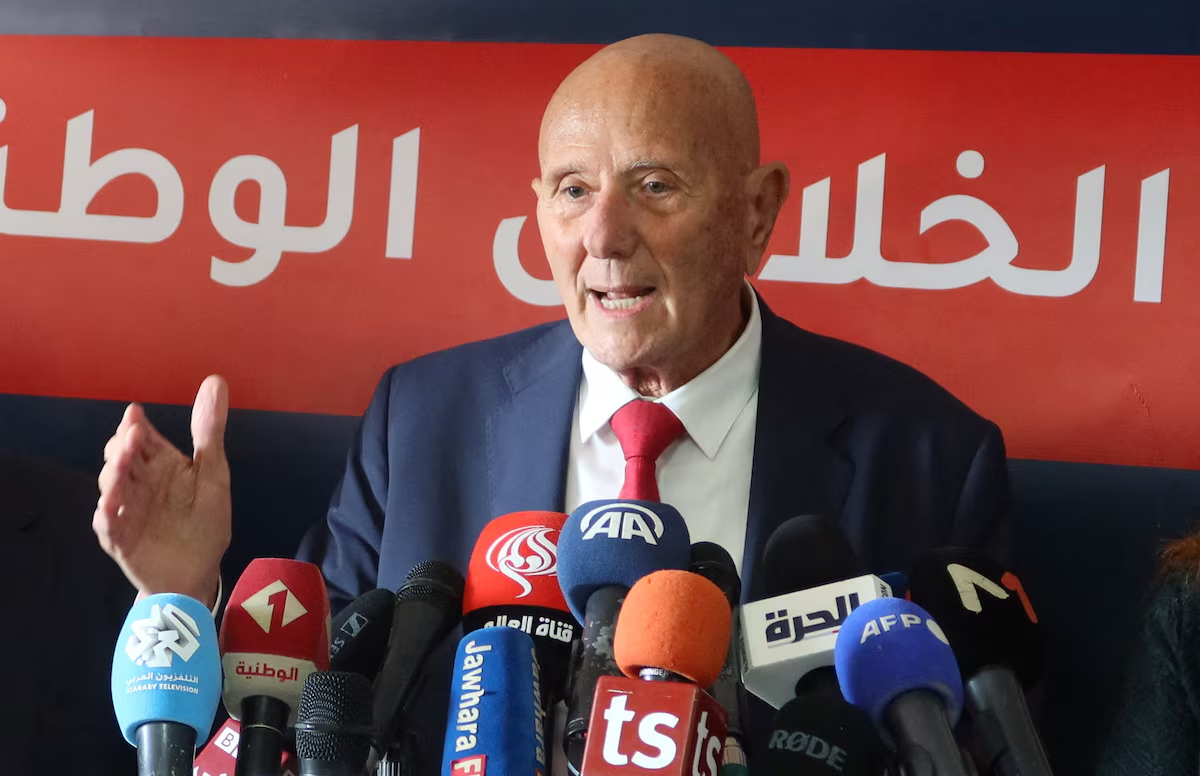
Tunisia has entered yet another tense chapter as police on Thursday arrested veteran opposition leader Nejib Chebbi to enforce a 12-year jail sentence for alleged conspiracy. His family confirmed the arrest, marking a major escalation in President Kais Saied’s ongoing crackdown on political dissent. Chebbi, aged 82, has been one of Tunisia’s most persistent voices for democracy for nearly half a century. His arrest signals the government’s willingness to exert full pressure on opponents, regardless of age, political stature, or public standing.
A Lifetime Spent Challenging Power
Chebbi’s political journey stretches back to the 1970s under Tunisia’s founding president, Habib Bourguiba, and later under authoritarian leader Zine El Abidine Ben Ali. He survived multiple eras of repression and became an influential figure during and after the 2011 revolution that toppled Ben Ali.
For many Tunisians, Chebbi represents the country’s long and turbulent struggle for democratic governance. His detention is therefore seen not just as the arrest of an individual, but as the symbolic intimidation of a generation that fought for Tunisia’s freedoms.
Sweeping Sentences Highlight Intensifying Crackdown
Only last week, a Tunisian appeals court handed down sentences of up to 45 years to dozens of political figures, lawyers, activists, and businessmen. Chebbi was among the 40 defendants charged with conspiracy to overthrow the president—one of the largest political prosecutions the country has seen in recent years.
Critics argue that these harsh verdicts underscore President Saied’s shift toward authoritarianism since he consolidated power in 2021, dissolving parliament and ruling by decree.
More Arrests and Hunger Strikes Fuel Outrage
In addition to Chebbi, police also arrested activist Chaima Issa—sentenced to 20 years—and opposition lawyer Ayachi Hammami, who received five years. Both have begun open-ended hunger strikes demanding their release.
The growing list of detained dissidents has sparked widespread condemnation from rights groups, who accuse the government of silencing critics through politically motivated trials and judicial intimidation.
Chebbi’s Defiant Words Before Imprisonment
Days before his arrest, Chebbi told Reuters he had “accepted his fate” but urged Tunisians not to stay silent.
He called on citizens to “escalate protests to save democracy, which Saied seeks to suppress.”
His son, Louay Chebbi, echoed this sentiment after the arrest, declaring:
“They arrested him, but they cannot stop the countdown to the hour of freedom.”
Government Insists It Is Fighting Corruption
Authorities, however, maintain that the detainees—who include former intelligence chief Kamel Guizani—plotted to destabilise the country. According to security agencies, the accused aimed to overthrow Saied’s administration.
President Saied has framed the arrests as part of a broader battle against “rampant corruption” within the political class, insisting that he plays no role in judicial decisions.
A Nation at a Crossroads
Tunisia, once celebrated as the success story of the Arab Spring, is increasingly viewed as drifting back toward authoritarian governance. With opposition leaders behind bars, hunger strikes gaining traction, and civil society under pressure, many fear that Tunisia’s fragile democratic institutions are eroding at an alarming pace.