Terror Suspects, Alleged Financiers Were Linked To Powerful Nigerians Including Ex-AGF Malami, Former Army Chiefs, Others –Maj. Gen. Ali-Keffi (Rtd)
Explosive revelations from retired Major General Danjuma Ali-Keffi have thrown new light on a secret counter-terrorism operation that allegedly uncovered links between Boko Haram financiers and some of Nigeria’s most powerful political and military figures. According to Ali-Keffi, the findings were so sensitive that they triggered a coordinated effort to suppress the investigation and silence those involved.
Operation Service Wide, A Secret Mission That Became Too Big To Contain
In 2021, former President Muhammadu Buhari approved Operation Service Wide, OSW, a multi-agency task force led by General Ali-Keffi. Its mission was simple but dangerous, identify Boko Haram masterminds, expose their financial backers, and dismantle the networks enabling terrorism.
But Ali-Keffi says OSW uncovered something far beyond what anyone anticipated. The investigation allegedly exposed a sprawling network of financiers with direct or indirect links to top government officials, influential military commanders, and powerful banking figures. Instead of support, Ali-Keffi claims the response was an orchestrated effort to shut down the probe entirely.
The NFIU Briefing That Changed Everything
Information obtained by SaharaReporters indicates that OSW, working closely with the Nigerian Financial Intelligence Unit, made several high-profile arrests in March 2021. The arrests followed detailed financial tracking that linked money flows to terrorism financing.
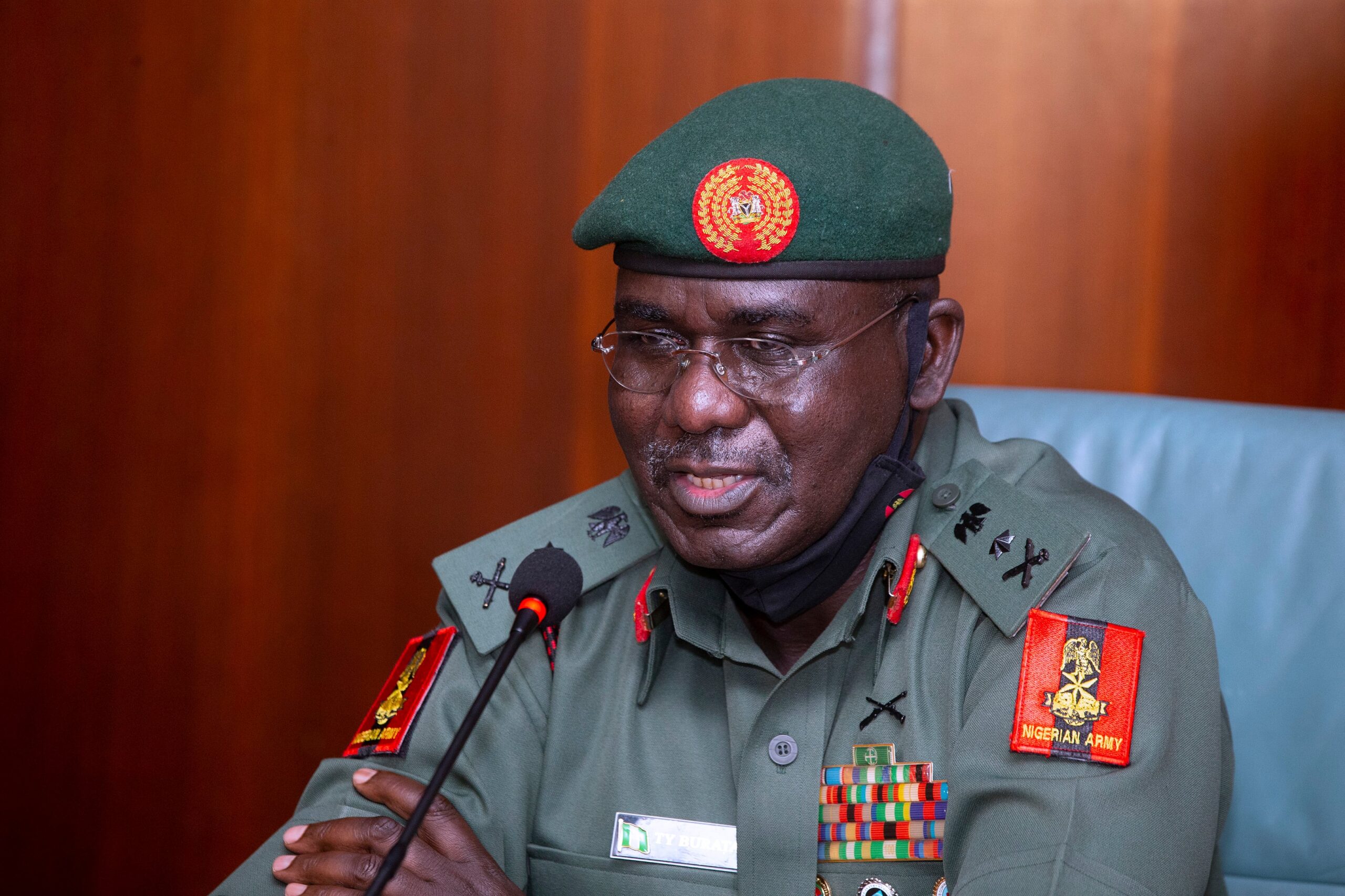
These findings were formally presented to President Buhari in September 2021. According to Ali-Keffi, former Chief of Army Staff, Gen. Faruk Yahaya, featured prominently in the briefing, though later evidence allegedly linked him to one of the arrested suspects.
Just one month after the briefing, Ali-Keffi was unexpectedly summoned to the Military Police Headquarters. On October 18, 2021, he appeared voluntarily, was interrogated for hours, and then detained. He remained in custody for 64 days without charges, without a query, and without trial before being forced into compulsory retirement.
“Till today, I don’t know my offence,” he said, insisting his detention was designed to halt OSW’s investigation.
His petition to President Bola Tinubu has, according to him, received no action, prompting him to file a case at the National Industrial Court, which he claims has not sat even once due to suspicious delays.
Suspects Allegedly Linked To Buratai, Malami, Emefiele, And Others
General Ali-Keffi says his claims are not based on speculation but on direct information from Modibbo Hamman-Tukur Ribadu, then Director of the NFIU, who worked closely with OSW.
According to Ali-Keffi:
- Two suspects were linked to former Chief of Army Staff, Lt. Gen. Tukur Buratai
- Two others were linked to former Attorney-General of the Federation, Abubakar Malami
- One suspect was linked to former CBN Governor, Godwin Emefiele
- Gen. Faruk Yahaya was linked to one suspect
Ali-Keffi emphasized that none of these officials were accused of terrorism financing. Instead, the suspects had business ties with them, especially through Bureau De Change operations that investigators believed served as cover for money flowing to terrorist groups.
He also revealed that Buratai allegedly asked the NFIU Director to persuade him to release two suspects, a request Ali-Keffi says he refused. He reported the situation directly to Buhari, who told him, “You report to me and to me alone.”
The $600 Million Offshore Account And A Failed $50 Million Bribe
One of the most shocking discoveries involved Aboubacar Hima, an international suspect with an offshore account holding about $600 million. NFIU traced the funds and alerted the United States, which froze the account.
Ali-Keffi says the NFIU Director later informed him that an intermediary acting on behalf of Hima offered a $50 million bribe for Nigeria to claim the funds were legitimate, effectively unfreezing the account. He rejected the offer.
After his detention and removal, he learned that the Nigerian government eventually wrote to the U.S. requesting that the funds be released.
Attempts To Weaken And Derail The Investigation
According to Ali-Keffi, OSW gathered strong evidence to charge 48 suspects with terrorism financing, but enormous pressure mounted to reduce the charges to money laundering. He claims this was intended to shift the case to the EFCC, which at the time operated under Malami’s influence and was chaired by his relative, Abdulrasheed Bawa.
He also alleged:
- A top prosecution lawyer assisting OSW was quietly removed after refusing to compromise
- The AGF’s office failed to pursue asset forfeiture orders
- Only detention orders were sought
- The presidency and powerful officials “wanted to kill the investigation”
He says fabricated accusations were later used to justify his arrest and forced retirement.
Release Of The Suspects After His Removal
Once Ali-Keffi was removed from OSW, the entire operation collapsed. The 20 top suspects and others arrested were reportedly released without ever being charged.
He says insiders told him the suspects were warned:
- Not to speak to the media
- Not to take legal action
- Not to challenge their nine-month detention
NFIU was allegedly pressured to drop terrorism-financing allegations entirely.
A List Of Over 400 High-Value Targets, Including Shekau
Perhaps the most explosive claim was Ali-Keffi’s revelation that OSW had compiled a list of more than 400 individuals to be arrested or neutralized, including the late Boko Haram leader, Abubakar Shekau.
“We couldn’t arrest Shekau,” he said, “so we engineered what happened to him.”
He added that the NFIU, EFCC, and AGF’s office should be able to explain whether the funds traced to the alleged sponsors were ever recovered or quietly released.
A Battle Against Powerful Forces
General Ali-Keffi maintains that his detention, dismissal, and silencing were direct consequences of refusing to compromise a terrorism-financing investigation that touched some of Nigeria’s most powerful individuals.
His disclosures raise critical questions about political interference, institutional sabotage, and the true depth of Nigeria’s terrorism financing networks.
As the legal and public fallout continues, the revelations may force a deeper national conversation about transparency, accountability, and the uncomfortable intersection between military operations and political power.